


What Should Exercise Look Like for the Aging Woman and, WTF does that Actually Mean?

Updated: 17 hours ago

If you are a woman in your 40s, 50s, or 60s, you are busy with family, partner, career, and are likely going through perimenopause and menopause. Fitting in exercise can seem impossible, and there is the added barrier of not knowing what exercise will bring the greatest benefit. If you are already exercising, it might be time to change up your routine. Let’s examine what happens during these years and how you can maximize your time and benefit!
From collegiate soccer player to crossfit games athlete, my entire adult life I have been very active. With hard work I have managed to keep a fit and muscular composition through strength training, until I hit my mid 40’s. What seemed like overnight I began to notice a difference in my weight and overall body composition. Things just seemed a little “softer.” So like any normal woman I thought I just needed to clean up a few things in my diet, I mean clearly it wasn’t my training methods or was it? Come to find out both played a vital part. Training approaches in my 20’s & 30”s were no longer serving my ever changing body, aka perimenopause, and protein intake was not being prioritized enough. I wasn’t doing enough to support the decline in my hormone levels.
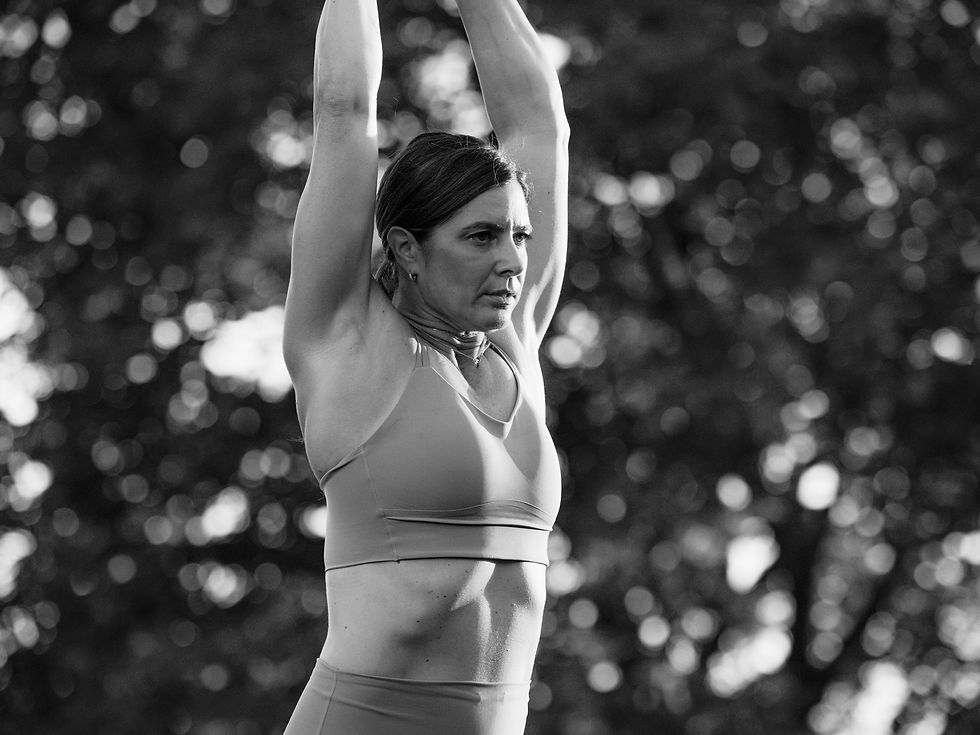
I intentionally began incorporating more strength days with an emphasis on heavy, 4-5 sets, 4-6 reps each set. Each set is challenging, but doable and the warm up sets don’t count as working sets. I still keep room in my week for my heavy breathing workouts-crossfit, interval training, and sprint training. Finding a balance with these 3 fitness modalities, (4 including mobility, more on that later) especially strength training, has been helpful in retaining lean muscle mass, bone density, metabolic control, and mood stabilization.
A great place to start:
If you are looking for a place to start and you live in Salt Lake City come see me at PURE Fitness in Millcreek! We introduce, teach, and provide strength training in a supportive and welcoming community.
More Resources:
If you are looking for an at home program you can explore Dr. Stacy Sim’s Strength Programs. She offers a variety of programs from beginner to advanced.
Bone Health Baseline:
Another resource to explore and if you are interested in some baseline numbers is doing a Dexa Scan. It can provide you with feedback & measurements on bone density, body composition, including total body fat, lean mass, & fat distribution.
Another great resource for more information on bone health and scans is this article Babble created earlier this year. Check it out here.

Burning Calories VS Building Health
Weight loss is a significant concern for many women. However, focusing on burning calories can sometimes come at the expense of the workout you really need. Remember the changes associated with middle age? Let’s quickly revisit why we do want to lift heavy shit!
Preserving muscle mass
Supporting bone density
Improving balance, mobility, & joint function
Metabolic Control
Improving mood and mental clarity
Improve Sleep
Strength Training is the Foundation, but what is it exactly?

Strength Training is any physical exercise designed to improve muscular fitness by making muscles work against an external force. It uses equipment like barbells, dumbbells, kettlebells, weight machines, resistance bands, or your own body weight to build muscle mass, strength, and endurance. The only way to continue to gain strength and muscle mass is to gradually increase resistance by challenging your muscles over time.
Strength training deserves top priority because:
Muscle naturally declines with age if it's not challenged.
It helps maintain and increase metabolism.
It supports healthy joints.
It improves posture.
Makes everyday activities easier.
Helps protect bone health.
Elevates mood.
Improves sleep.
Let’s discuss the Fears & Myths surrounding Strength Training
I have pretty much heard it all throughout my 17 years in the fitness industry. Listed below are some of the highlights and my personal favorites around “why not to lift weights” that I would like to discuss:
1) “If I lift heavy, I’ll bulk up.”
Strength Training can actually help create the shape many women are looking for; defined shoulders, back, glutes, legs, & abs. As stated earlier it is also one of the best things you can do for your overall health during perimenopause and menopause. Think of strength training as protecting your body and investing in the body you want in the future. It’s about maintaining and preserving muscle mass, supporting your bone health, staying capable, and feeling strong in a period where your body is changing.

2) “I need to use light weights for toning.”
Building that type of appearance requires strength training, using light weight isn’t inherently better. Now please recognize that everyone’s strength differs, so as long as you are lifting heavy for you, that’s what matters, and it’s all relative. You don’t necessarily need to chase a weight, instead chase the stimulus and adaptation.

3) “Heavy weights are dangerous.”
Poor technique, inappropriate loading, & progressing too quickly can indeed increase the risk of injury, but that doesn’t mean the answer is to avoid lifting heavy altogether. With learning proper technique & progressively increasing the load it can help foster a safe and responsible environment for minimizing injury.

4) “I can’t lift weights, I don’t know where to start or how to do it.”
If you are not sure where to start go to a local Crossfit Gym in your area. Most Crossfit gyms offer a series of Intro Classes focusing on lifting technique, and proper movement patterns. If they don’t offer the classes look for another one, you definitely want to join a gym that focuses on the coaching aspect of strength training. It should be a top priority. Another benefit of joining a Crossfit Gym is the community. You are surrounded by like minded people who also see the importance of strength training and the multitude of benefits it offers.
Cardio & High Intensity Fitness Still Matters—Just Don't Make It Everything, Make it your Soul Food

Cardiovascular exercise is an activity that elevates your heart and breathing rate, improving their efficiency. We all like to feel the sweat, which is fine, just try not to make it your main source of training.
Benefits:
A stronger heart and lungs, which pump blood more efficiently, lower blood pressure and cholesterol levels.
Burning more calories can help with weight management and improve insulin sensitivity.
Improved endurance for other activities.
Increased positive mood due to the release of endorphins.
Lowers stress.
Some food for thought…you may think that you need to run, hike, swim, or cycle to achieve cardiovascular benefits, and these activities certainly continue to provide a robust cardio response. But what if you don’t have the time? Fortunately, there is an alternative called High-Intensity Interval Training (HIIT). HIIT can be completed in 10-30 minutes and provides many of the benefits of longer cardio exercises.
Mobility and Balance-Don’t sleep on it!
Mobility and balance are critical components of any exercise program, helping you perform exercises and daily activities with a lower risk of injury. They help keep you primed for those strength days and high intensity interval training days.
Mobility Exercises
Focus on the areas that commonly become stiffer with age: hips, ankles, thoracic spine (upper back), and shoulders.
Hips
90/90 hip rotations
World’s Greatest Stretch
Couch Stretch
Fire Hydrants
Deep passive squat hold (using support if needed)
Ankles
Knee-over-toe ankle mobility
Heel-to-toe rocking
Calf stretches against a wall
Thoracic Spine
Cat-Cow
Thread the Needle
Open Book rotations
Foam roller thoracic extensions
Shoulders
Wall slides
PVC/broomstick shoulder pass-throughs
Band pull-aparts
Arm circles
Putting it All Together

As you are shopping around for a gym or an online program take into account time constraints, maximum strength, cardiovascular benefit, and continuous improvement. Below is a list of comprehensive programs that do just that.
CrossFit Gyms: A perfect blend of cardiovascular conditioning, weightlifting, and gymnastics to push your limits and elevate your fitness.
High-Intensity Interval Training (HIIT) The style of exercise that alternates short bursts of vigorous effort with periods of recovery. It’s an efficient way to improve cardiovascular fitness and metabolic health, and it can complement strength training—including Olympic lifting.
Private Training: Can be a great way to get started with an exercise program, build confidence, and learn proper technique while working with a coach privately.
Middle age isn't a time to necessarily exercise more—it's a time to exercise smarter. If you're just starting or looking for a change, a new fitness strategy may be exactly what your ever-changing body needs. Happy Training!
About The Author:

Alli Cerruti has coached athletes of all ages and fitness levels within the CrossFit space for over 15 years. She played on the women's soccer team at the University of Utah from 1998–2001—GO UTES! During her time as a student-athlete, she earned a Bachelor’s Degree in Psychology, followed by a Master’s Degree in Exercise Sport & Science. Ali is a firm believer in functional fitness and the powerful benefits that strength and conditioning bring to both physical and mental well-being. Her true passion lies in building strong, supportive communities through group fitness. When Ali created PURE Fitness, her vision was to cultivate an environment where individuals feel supported, guided, and motivated to reach their full potential—not just as athletes, but as people. It’s about trusting the process and committing to becoming the best version of yourself. PURE Fitness is more than a gym—it’s a complete experience. Sign up for a free class here.
What if you got a favorite things newsletter delivered weekly to your inbox?
Sign up here and stop feeling overwhelmed. Instead you’ll feel informed and on top of trends like great books, popular shows, fashion, recipes, and more.
You heard it on Babble.
Share this story today!
Want more? Follow Babble on Instagram.
Hit Follow. We’re You’re People.


Comments